Anfield Stadium Capacity & Stands Explained
Anfield holds 61,276 after the 2024 Anfield Road expansion. Here is the capacity stand by stand, how it grew to this point, the record crowd, and which of those stands the tour lets you into.
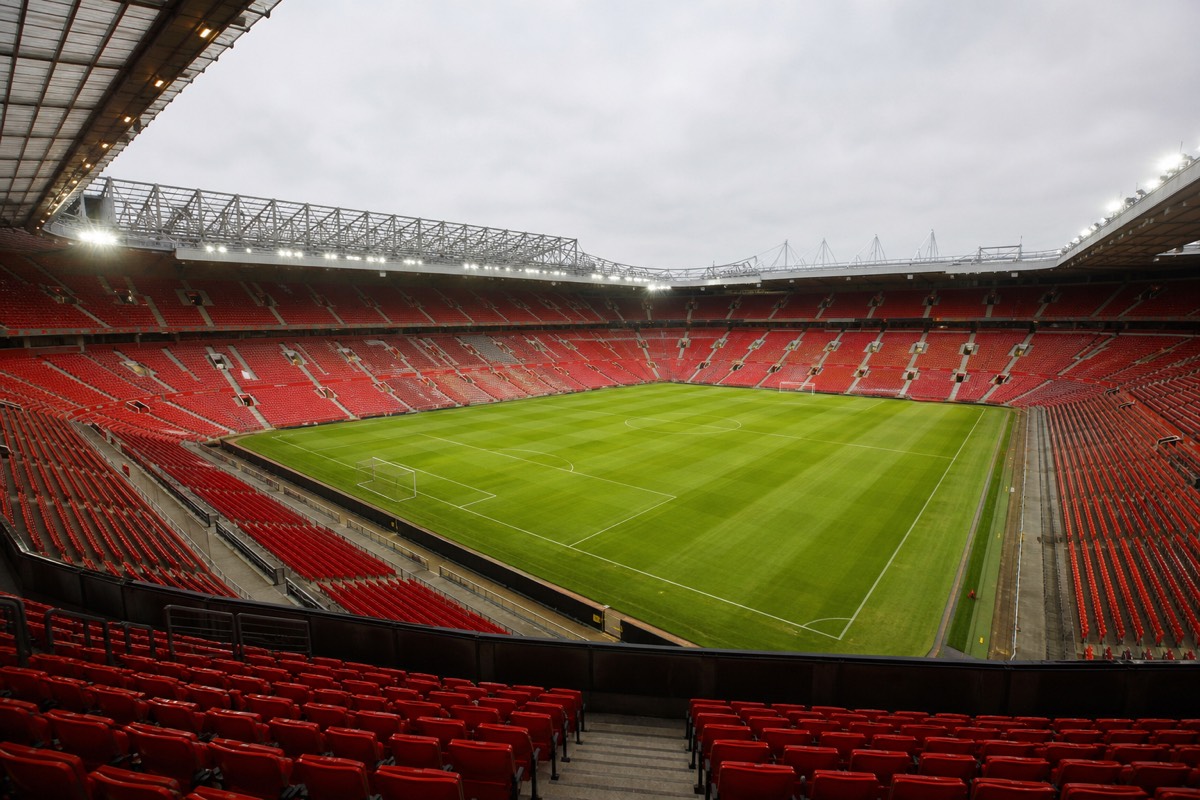
Anfield is bigger than it has ever been. When the expanded Anfield Road Stand opened in early 2024 the ground pushed past 61,000 seats, and the four stands around the pitch now hold very different numbers of people, sit at very different heights, and carry very different reputations. Here is how that capacity breaks down, how it grew to this point, and which of those famous stands you actually get to stand in on Liverpool Stadium Tour.
Anfield capacity by stand (approximate seats)
Four stands, 61,276 seats in total. Figures are approximate and shift by a few hundred with hospitality and accessible spaces.
What is Anfield's capacity in 2026?
Anfield's current capacity is 61,276, reached when the expanded Anfield Road Stand opened in early 2024. That total is split across four stands of very different sizes: the three-tier Main Stand, the two-tier Anfield Road end, the single-tier Kop, and the Sir Kenny Dalglish Stand along the far touchline.
The 61,276 figure is the number the club and the football authorities use for a full-house league fixture, and it is set out on the stadium's detailed Wikipedia record. It counts everything: general admission seats, hospitality, media positions and accessible spaces. On a quiet non-match morning, when you can walk the edge of the pitch on a tour, it takes some imagination to picture that many people folded into the same bowl. Standing in the empty Kop and looking the length of the grass toward the Anfield Road end is the moment the scale lands.
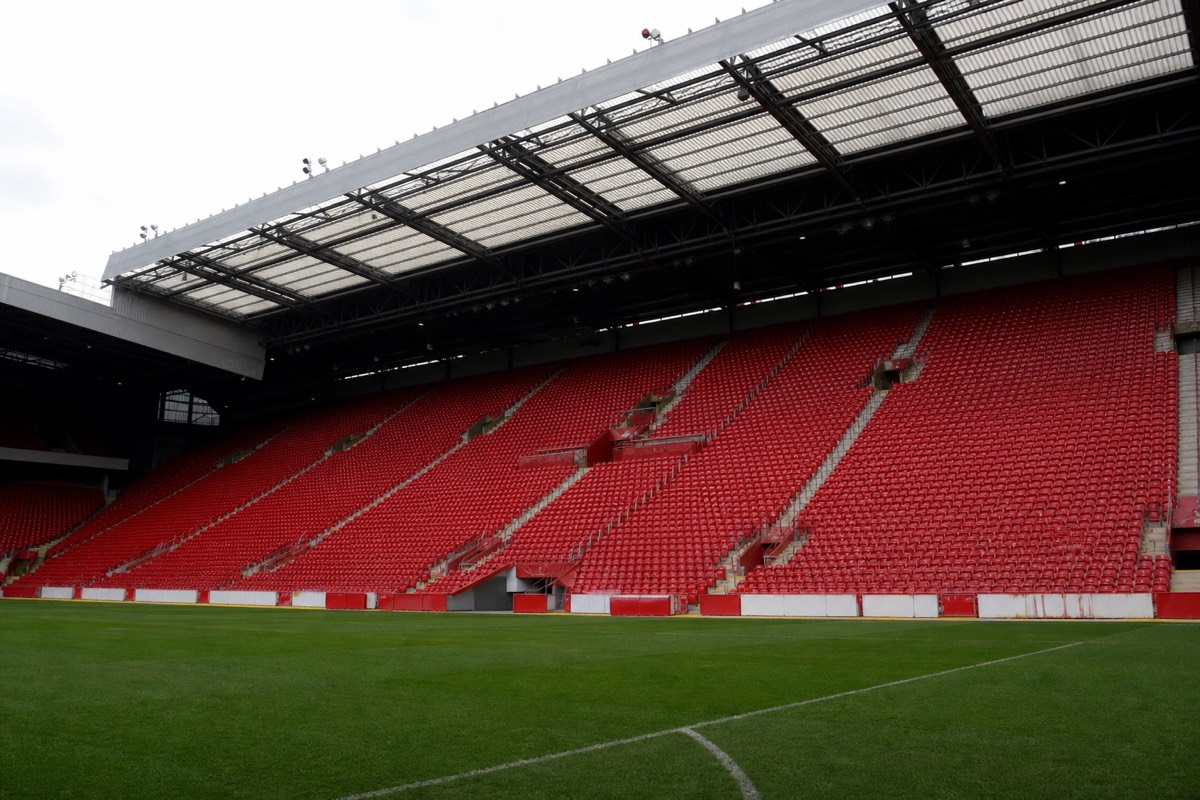
The quick-reference table below is the whole ground in one glance, and the sections that follow open each stand up in turn.
| Fact | Detail |
|---|---|
| Current capacity | 61,276 |
| Year opened | 1884 |
| Largest stand | Main Stand (about 20,500) |
| Only single-tier stand | The Kop (12,850) |
| Away supporters | Anfield Road Stand, lower tier |
| Record attendance | 61,905 (v Wolverhampton Wanderers, 1952) |
| Pitch size | 101 by 68 metres |
How is Anfield's capacity split stand by stand?
The Main Stand is by far the largest at roughly 20,500 seats, followed by the Anfield Road Stand at about 16,100, the Kop at 12,850, and the Sir Kenny Dalglish Stand at around 11,400. Those four numbers add up to the ground's 61,276 total, with a few hundred hospitality and accessible spaces distributed across the corners.
Published stand figures move around by a few hundred depending on how hospitality boxes, wheelchair positions and media seats are counted in a given season, so read the per-stand numbers as close approximations rather than to-the-seat totals. What does not change is the shape of the ground: one enormous three-tier stand down one side, a tall two-tier end that was just rebuilt, the famous single-tier home end, and a smaller two-tier stand opposite the Main Stand.

| Stand | Approx. capacity | Tiers | Character |
|---|---|---|---|
| Main Stand | ~20,500 | Three | Largest stand; holds the dressing rooms, players' tunnel, press room and hospitality |
| Anfield Road Stand | ~16,100 | Two | Newest expansion; away supporters sit in the lower tier |
| The Kop | 12,850 | One | Single-tier home end, the club's loudest support |
| Sir Kenny Dalglish Stand | ~11,400 | Two | Runs along the touchline opposite the Main Stand |
If you want to know exactly where the different blocks and rows sit and what the pitch looks like from each one, our companion guide to the Anfield seating plan maps out where the best views are stand by stand.
Why is the Main Stand the biggest part of Anfield?
The Main Stand is the largest stand at Anfield, holding roughly 20,500 across three tiers. It was rebuilt in 2016, adding about 8,500 seats and lifting the whole ground to 54,742, and it runs the full length of one touchline while housing the players' tunnel, both dressing rooms and the press room.
The Main Stand carries more than a third of Anfield's total capacity on its own. Its three tiers stack a large lower tier of roughly 9,300 seats, a shallow middle tier of around 3,100, and a tall upper tier of about 7,900, which is what makes it tower over the rest of the ground. That 2016 redevelopment was the first of the two modern rebuilds, and it set the template the Anfield Road expansion followed a few years later.
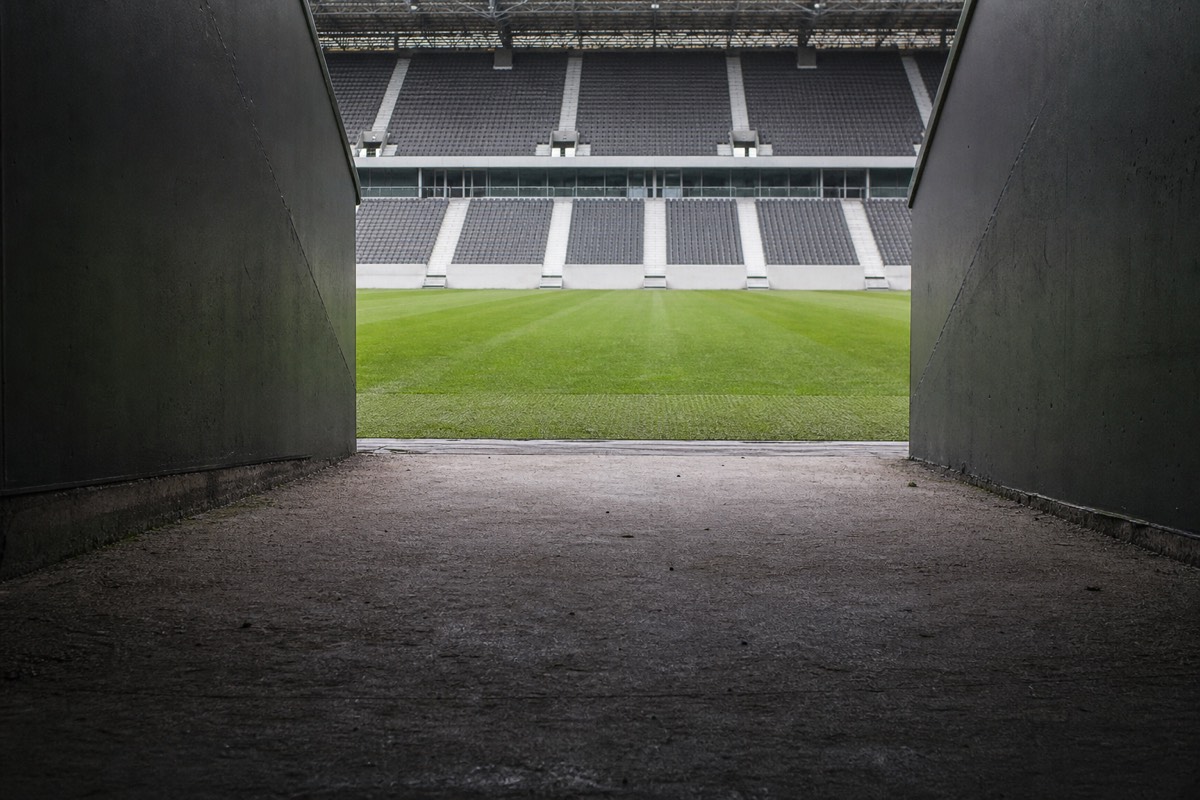
For a visitor, the Main Stand matters for a reason that has nothing to do with the seat count. Almost all of the behind-the-scenes areas a tour walks through sit inside it: the players' tunnel, the home and away dressing rooms, the press room and the route out to the dugout. So while you never take a seat in its upper tier on a tour, you spend much of the visit inside its lower floors, which is also where the tour starts and part of why it runs to roughly 70 to 90 minutes.
Why is the Kop the most famous stand at Anfield?
The Kop holds 12,850 and is the only single-tier stand at Anfield, which is what gives it its wall-of-noise reputation. Until Tottenham's new stadium opened it was the largest single-tier stand in Britain, and it is the terrace where the crowd sings "You'll Never Walk Alone" before kick-off.
The stand began life in 1906 as a steep open banking at the Walton Breck Road end. A local sports writer nicknamed it the Spion Kop, after a hill in the Second Boer War where many Merseyside soldiers had died, and the name stuck for good. A roof went on in 1928, and in its terracing heyday the Kop packed in close to 30,000 standing supporters on the biggest days.

Everything changed in 1994, when safety legislation forced English top-flight grounds to become all-seater. The old standing Kop was demolished and rebuilt with seats, which cut its capacity to a little over 12,000. Today it seats 12,850, roughly a quarter of the whole ground, in one continuous sweep with no upper tier to break the sound. That single-tier design is exactly why it sounds the way it does: the noise has nowhere to escape and rolls straight down onto the pitch. Liverpool adopted "You'll Never Walk Alone" as its anthem back in 1963, and the Kop is where you hear it loudest.
On a stadium tour you get to stand in the empty Kop and look down the pitch toward the goal Liverpool attack in the second half. It is the closest a quiet-day visit gets to what match day feels like, and the guides tend to give the group a moment of space here to let it register. If you are weighing a tour against the real thing, our comparison of a tour set against a full matchday lays out what each one gives you.
How did the Anfield Road expansion change the capacity?
The Anfield Road Stand expansion added roughly 7,000 seats and lifted the ground from about 54,000 to 61,276. Much of the rebuilt stand opened for the home game against Burnley on 10 February 2024, taking the Anfield Road end to around 16,100 seats across two tiers.
This was the second of two major redevelopments that reshaped Anfield in less than a decade. Where the earlier Main Stand project rebuilt the largest side of the ground, the Anfield Road scheme raised the roof on the opposite end and stacked a much bigger upper tier on top of the existing lower tier. The result turned what had been the smallest end into the second-largest stand in the stadium.
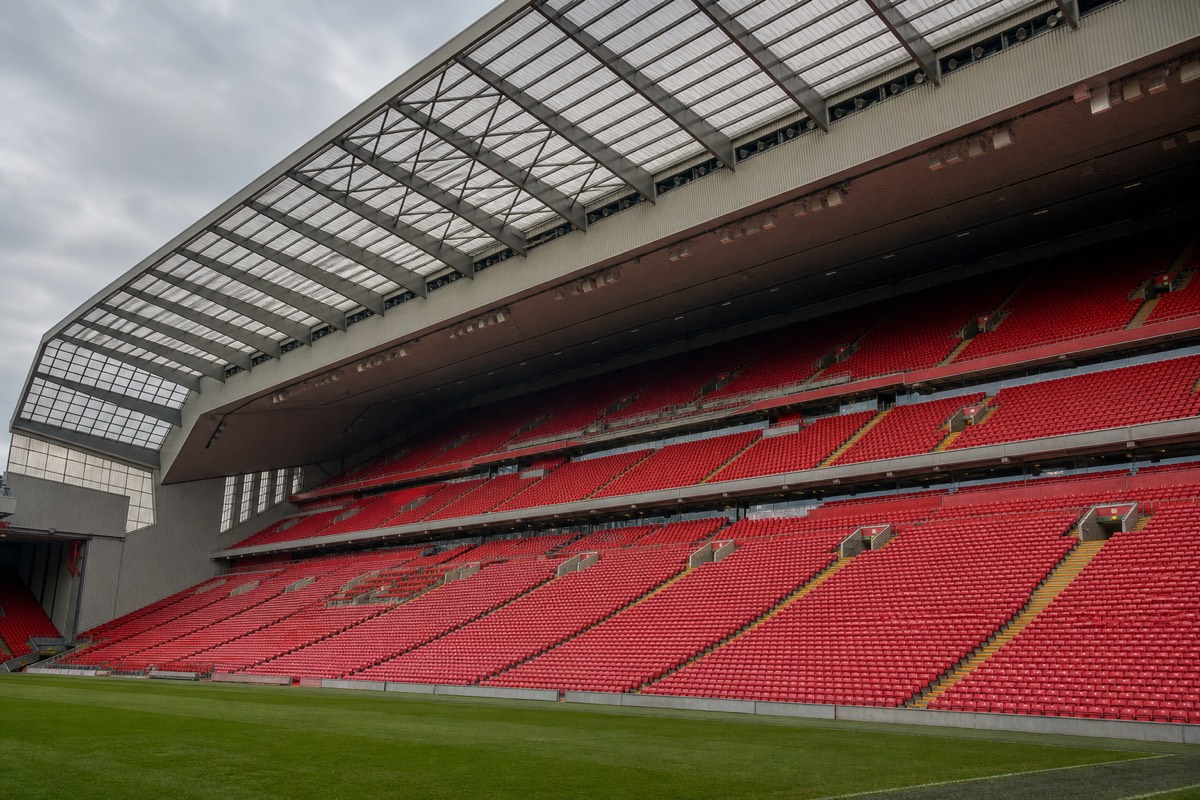
Away supporters continue to be housed in the lower tier of the Anfield Road Stand, which is standard practice at English grounds. The extra home seats added higher up are the ones that took the overall number past 61,000, and they are why the record all-seater crowds of the current era sit so close to the ground's absolute historic record. Because both big rebuilds sit inside the Main Stand and the Anfield Road end, they also expanded the behind-the-scenes areas the tour walks through, from the tunnel to the media rooms.
The project did not run entirely to plan. Building difficulties meant only part of the upper tier opened at first, so the full 61,276 was not reached the moment the stand came back into use, and the club brought the remaining seats online in stages through the following season. For anyone planning a visit, the practical upshot is simple: the ground you see today is the finished, expanded version, larger than any Anfield that came before it.
How has Anfield's capacity changed over time?
Anfield has grown in steps for more than a century, from a Victorian ground opened in 1884 to today's 61,276. The biggest modern jumps came with the all-seater conversion of the Kop in 1994, the new Main Stand in 2016 that took the ground to 54,742, and the Anfield Road expansion in 2024.
The timeline below tracks the developments that matter for the seat count. Exact totals for the earliest eras are hard to pin down because standing terraces were counted differently from seats, so the older rows describe the change while the modern rows carry the club's confirmed figures.

| Year | Development | Capacity after |
|---|---|---|
| 1884 | Anfield opens as a football ground | Small Victorian ground |
| 1906 | The Spion Kop terrace is built and named | Grew sharply |
| 1928 | The Kop is roofed and enlarged | Kop alone held about 30,000 |
| 1992 | Kemlyn Road Stand rebuilt with a second tier, renamed the Centenary Stand | Rose with the new tier |
| 1994 | The Kop is converted to an all-seater stand | Kop cut to about 12,390 |
| 1998 | A second tier is added to the Anfield Road Stand | Around 45,000 |
| 2016 | The new Main Stand opens on 9 September | 54,742 |
| 2017 | The Centenary Stand is renamed the Sir Kenny Dalglish Stand | 54,742 |
| 2024 | The expanded Anfield Road Stand opens | 61,276 |
The renaming in 2017 is worth a line of its own: the Centenary Stand was given Kenny Dalglish's name in recognition of his standing at the club as player and manager, and for how he carried Liverpool through the aftermath of the Hillsborough disaster. The stand had started out decades earlier as the modest Kemlyn Road Stand before its 1992 rebuild.
What is the record attendance at Anfield?
The record attendance at Anfield is 61,905, set on 2 February 1952 for an FA Cup fifth-round tie against Wolverhampton Wanderers. That crowd was packed onto standing terraces, so with the ground now all-seater at 61,276 the 1952 record is almost certain to stand for good.
The gap between the historic record and today's capacity is tiny, only a few hundred, but the two numbers are not really comparable. In 1952 a large share of that crowd was standing shoulder to shoulder on the Kop and the other terraces, which fit far more people into the same footprint than modern seats do. When every spectator has an allocated seat, the physical ceiling of the ground is the 61,276 figure, and the biggest all-seater crowds since the 2024 expansion have come within touching distance of it.
What the tour gives you is the empty version of all that: the same bowl that produced the 1952 record, with the seats bare and the pitch quiet, so you can see the geometry that makes it loud when it is full. Reading the ground with no one in it is a different pleasure from a matchday roar, and plenty of visitors decide the two are worth doing on separate trips.
How does Anfield's capacity compare with other grounds?
At 61,276, Anfield is one of the largest club grounds in England, sitting just below Tottenham's stadium and just above the Emirates. Only Old Trafford is clearly bigger among the traditional club stadiums, at roughly 74,000, while the newest builds cluster in the low 60,000s.
The comparison below uses the commonly published seated capacities. Like Anfield's own figure, each of these moves by a few hundred when hospitality areas are reconfigured, so treat them as approximate. The point they make is simple: the Anfield Road expansion lifted the ground into the same bracket as the newest purpose-built stadiums in the country, without losing the enclosed, steep, close-to-the-pitch feel that the modern all-glass bowls do not have.
| Ground | Club | Approx. capacity |
|---|---|---|
| Old Trafford | Manchester United | ~74,197 |
| Tottenham Hotspur Stadium | Tottenham Hotspur | ~62,850 |
| Anfield | Liverpool | 61,276 |
| Emirates Stadium | Arsenal | ~60,704 |
Which parts of Anfield does the stadium tour actually reach?
The stadium tour is not a walk through the seating tiers; it takes you into the behind-the-scenes areas plus the pitch edge and the Kop. You walk the players' tunnel, stand pitchside and sit in the home dugout, see both dressing rooms and the press room, stand in the empty Kop, and finish at the trophy room and museum.
On the official Anfield stadium tour the club opens up the parts of the ground that a match ticket never gets you into. The route runs most days of the year outside fixtures, lasts roughly 70 to 90 minutes, and is restricted or shortened on match days when the club is preparing for a game. You can read the full run of stops in our breakdown of what the guided tour covers, and the pitchside and dressing-room portion, which is the highlight for most people, is set out in detail in our look at whether you really stand pitchside and step into the dressing rooms.
| Area | On the standard tour? | What you do there |
|---|---|---|
| Players' tunnel and the "This Is Anfield" sign | Yes | Walk the tunnel and touch the sign Shankly put up in 1974 |
| Pitchside and the home dugout | Yes | Stand at the edge of the pitch and sit in the dugout for photos |
| Home and away dressing rooms | Yes (non-match days) | See both rooms laid out as they are before kick-off |
| Press room | Yes | Sit where managers face the media after games |
| The Kop | Yes | Stand in the empty single-tier home end |
| Trophy room and interactive museum | Yes | See the silverware and the exhibits in the club's interactive museum |
| Upper tiers and matchday seats | No | Those are spectator seats you reach with a match ticket, not a tour |
Most people pair the guided route with the club's interactive museum, which the ticket includes and which adds roughly 30 to 45 minutes; our full guide to the club's interactive museum covers what is on display. If you are deciding whether the whole thing earns its place in a Liverpool trip, our honest take on whether the tour is worth it weighs it up, and the practical side, from what a tour ticket costs to how to reach the ground, is covered across the rest of the guides. The tour information and booking details are set out on the official stadium tour pages, and slots and today's price are on the live listing.